Friday, January 31, 2014

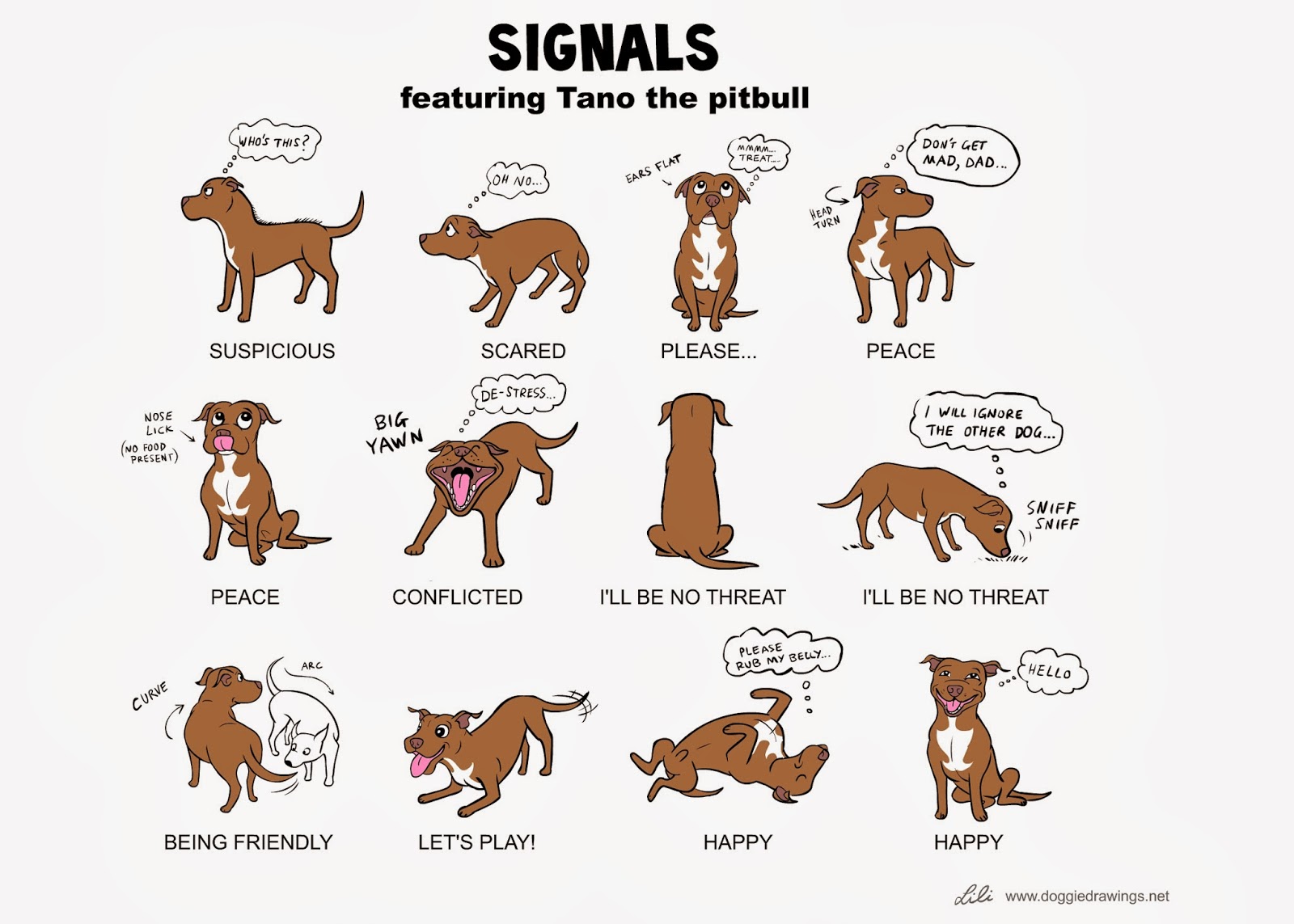
Dog body language


OK, this is a topic I will probably revisit...but I was working on a 4-H project with my daughter when we came across this and she really l liked it....so my thought is that other kids might too...a little know-how about doggy body language to help read our canines better....hope you enjoy it


Monday, January 27, 2014

One Site + 4 clubs = the Internationale Cluster of Dog Shows

Have you ever been to a "benched show" ???
     Don't even know what a benched show is ???


Thursday Feb 2oth- Park Shore Kennel Club, Inc.

Friday February 21st - Blackhawk Kennel Club

Saturday & Sunday February 22nd and 23rd- International kennel Club of Chicago ----> these two show days are  benched! 


This cluster of shows are sponsored by Pro Plan and super intended by Onofrio.  Located at 2710 Toughy Avenue in Chicago, Illinois; they offer unique features for both exhibitors and spectators.   Special events include Bred by Exhibitor competition, BIS puppy competition, amateur owner-handler competition, the introduction of a beginner puppy class for 4 - 6 month old puppies, a youth only dog judging class, micro chipping and CGC testing, a Coton de Tulear Seminar (to be a newly accepted AKC breed beginning July of this year) , Barn hunt trials, obedience , rally, multiple vendors and more ! There will be several breed specialties and supported breed entries including  springer spaniel, giant schnauzer, Portuguese water dog, staffordshire terrier, border terrier, norwich terrier, cavaliers, maltese, German shepherds, German shorthaired pointers , and golden retrievers! Please note there will be no classes for collies . 

*** Benched shows feature all the dogs in the show grouped by breed and display throughout the day in a public area while not being show ***
 
Admission:
children under 12 are free, adult are $20 . There is a  discount for multiple days and sr citizens

Parking : 
parking with a   free shuttle is  available on nearby 31st street 
 For more information, please see :  www.ikcdogshow.com


Monday, January 20, 2014

Puppy Play Groups


10 Tips for Supervising
 Group Playtime for Puppies

 There are many benefits from letting young puppies play together, however  it is important to closely supervise activities to make sure it is a safe, positive experience! For those of us not enrolling in a semi - formal play group or puppy kindergarten class, the same tips can apply when taking your puppy to the park, neighbor's , or even in the backyard to play. 


  1. Any time you don't feel comfortable with the way dogs are playing together, or the behavior of another owner interacting with the group of puppies, remove your puppy from the group. 
  2. Carefully watch your puppy with the other dogs. This isn't a good time to catch up on your reading or update your FB status --- your puppy needs you to watch out for them and you both should be having fun with the other puppies and owners 
  3. Keep the sessions short, young puppies can become overstimulated or tired and a fun game can turn into an overwhelming experience
  4. If you see any signs of the activity not being a positive experience for your puppy (watch it's body language -- is it trembling, trying to hide, being overly submissive ?) take a break
  5. Watch for canine bullies and have a group agreement that a puppy that is dominating or intimidating the others be removed or held by its owner for part of the session
  6. Be aware of your options --- would a smaller group or a small dogs only group or other solution be a more ideal match for your puppy ? What is your puppy's specific needs and maturity level? 
  7. Don't push a pup that is shy into the "action", as long as they are not showing signs of fear, it is ok to let them watch and decide on their own when they are ready to jump in
  8. Practice calling your puppy out of the group and reward her for coming with a favorite bite-size treat
  9. Do not feed your puppy shortly before play group and make sure it has had time "to go" in a familiar spot before group.
  10. Plan a calm down activity such as a short walk and allow your puppy to rest when you return home


Rusk County Dog License Info

It's that time of year again! County dog licenses are now due....
$5 if your dog is neutered/spayed, $10 if it isn't
After March 31st there will be a $5 per dog late fee added...
and if you are REALLY late , expect a hefty $30
per dog fee increase after June 29th ! Proof of rabies
required for any dog older than 4 months. 


Thursday, January 16, 2014

Recipe for Dog Cookies !


Dog

 Here's a recipe for 

Basic Dog Biscuits:


 Ingredients : 2 ½cups whole wheat flour (substitute regular flour or oats if your dog is sensitive to wheat) - 1 tsp. salt (or less) - 1 egg - 1 tsp. Beef or chicken Bouillon granules (can substitute beef or chicken broth/stock) - ½ cup hot water 


Directions : 1. Preheat oven to 350 degrees

 2. Dissolve bouillon in hot water
 3. Add remaining ingredients
 4. Knead dough until it forms a ball (approximately 3 minutes)
 5. Roll dough until ½ inch thick
 6. Cut into slices or bone shapes (you can purchase a bone shaped cookie cutter to make shapes with)
 7. Place dough pieces on lightly greased cookie sheet and cook for 30 minutes.


*Optional Add-Ins: Bacon or chicken broth, eggs, oats, liver powder, wheat germ, shredded cheese, bacon bits 

Monday, January 13, 2014

Ring Patterns


UPDATE April , 2014
I have joined a discussion group on FB called Learning to Show Dogs and it has a lot of information on it! Here is some links from there that may be helpful with the basic patterns:

https://www.facebook.com/groups/324624280935663/permalink/628465127218242/

https://www.facebook.com/notes/learning-to-show-dogs/links-to-gaiting-patterns/502800143118075

https://www.youtube.com/watch?v=wWtrqs70wwI

There is also some FB pages that sell / trade show equipment . Never hurts to look! Have a great weekend everyone!


The straight Down and Back is more common in the Group Ring, while the pattern done diagonally as shown below is very common in the individual breed evaluations :


Triangle or Down, Across and Back:


You should also practice moving at a nice smooth trot  in a circle ("around" the ring) . Advance showmanship competitions may include an "L" or "T" Pattern. Have as many people as possible talk to and touch your dog with you holding them for reassurance from a young age. Of particular importance is your dog getting used to having it's teeth looked at, a paw held, it's ears touched and being picked up and put down, and also getting used to riding in a car. This not only helps for shows, but can make trips and vet visits go much smoother ! Practice makes perfect :) On rare occasion, a judge may have a reverse triangle or other request, watch the dogs ahead of you and don't be afraid to ask the steward or judge to clarify if you aren't sure what to do. 
 Have Fun and Good Luck !

Thursday, January 9, 2014

Hypothroidism? Hip Dysplasia? Patellar luxation? What's That ???

Helpful Definitions for Genetic Disorders
***This list is not meant to be all inclusive or to advise for or against a specific breed, use it as an educational tool.  If you have concerns, talk to your vet and breeder ! ***

Hypothyroidism—abnormally low production of thyroid hormone; occurs in Golden
Retrievers, Doberman  Pinchers, Chow Chows, Giant Schnauzers and others.

Hip dysplasia—abnormal development of hip joint; occurs in Rottweilers, German
Shepherds, Labradors, Vislas, Great Pyrenees and others.

Cardiomyopathy—abnormal heart muscle; occurs in Boxers, Newfoundlands, Saint
Bernards, Doberman Pinschers and others.

Cataracts—thickening of the eye lens; occurs in Golden Retrievers, Labradors,
Chesapeake Bay Retrievers, Afghans, Old English Sheepdogs, Staffordshire Bull
Terriers and others.

Seizures—epilepsy or convulsions;  in Beagles, Poodles, Bichon-Frises,
Dachshunds, Springer Spaniels and more.

Bleeding disorders—lack of various blood clotting factors; more common in Alaskan
Malamute, Doberman Pinschers, Collies, German Shorthair Pointers, Bulldogs,
Greyhounds, Samoyeds and more.

Patellar luxation—kneecap slips out of place; more common in Yorkshire Terriers, Papillions,
Silky Terriers, Lhasa Apsos, Maltese, Pugs, Boston Terriers and others.

Retinal degeneration—decay of the nerve cell layer that lines the eye; more common in
Australian Shepherds, Collies, Pointers, Salukis, Border Collies, Gordon Setters and
many more.

Generalized demodectic mange—hair loss all over body due to a common skin mite;
tendency toward clinical signs occur most often  in Shar Peis, West Highland white terrier,
Scottish terrier, English bulldog, Boston terrier, great Dane, Weimaraners, Airedale,
Malamute and Afghan.

Glaucoma—increased pressure in the inner eye;  more common in Fox Terriers, Chihuahuas,
Boston Terriers, Basset Hounds, Salukis, Norwegian Elkhounds, Poodles and more.

Bone cancer—abnormal growth of bone cells; occurs in Doberman Pinschers, Irish
Setters, Great Danes, Saint Bernards and more.

Von Willebrand’s disease—certain type of bleeding disorder; more common in Doberman
Pinschers, German Shepherds, Shelties, Scottish Terriers, Greyhounds, Siberian
Huskies and more.

Hernia—weakness in body wall that allows internal tissues to protrude;more common in
Basenjis, Basset Hounds, Airedales, Springer Spaniels, Lhasa Apsos and more.

Cryptorchidism—one or both testicles fail to descend into scrotum; occurs in Border
Collies, Pomeranians, Poodles, Whippets, Weimaraners, Miniature Schnauzers,
Brittanies and more.

Entropion—eyelid(s) roll in and irritate the eye; common in Chesapeake Bay Retrievers,
Chow Chows, Chinese Shar Peis, Pugs, Akitas, Schipperkes and more.

Deafness—lack of hearing; more common in Cocker Spaniels, Bulldogs, Parson Russell
Terriers, West Highland White Terriers, Akitas, Dalmatians, American Staffordshire
Terriers, Shelties and more.

Intervertebral disc disease—“slipped disc” in spinal column; more common in Dachshunds, Beagles, Cocker Spaniels, Scotties, Pekingese, Poodles and others.